Steel Furniture vs Wood: Which Should I Choose?
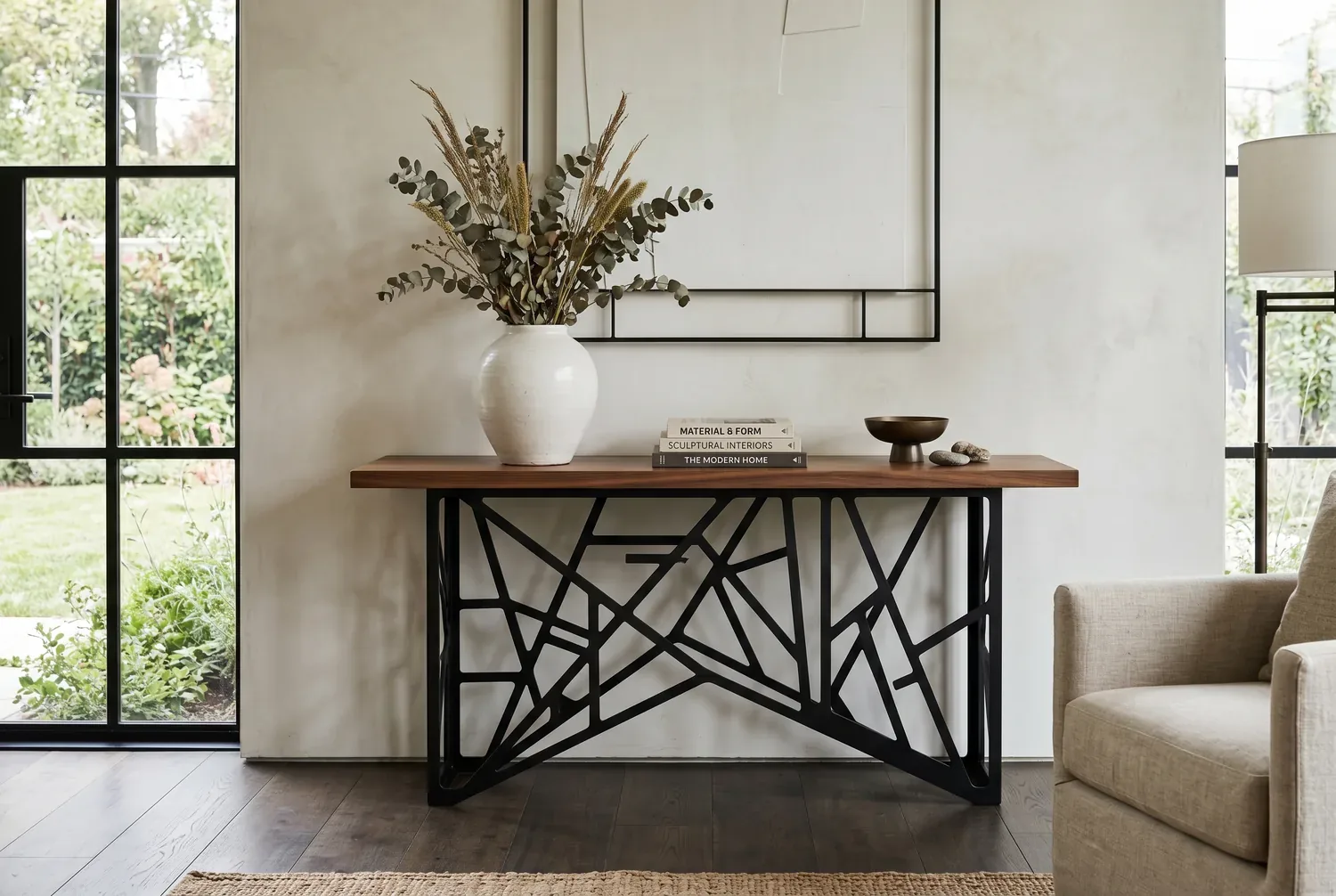
The choice between steel and wood comes down to one question before anything else: what look are you going for?
Aesthetics drive most furniture decisions, and they should — you're going to look at this piece every day. But aesthetics and practicality are not separate conversations. The look you want, the environment the furniture is going into, how much maintenance you're prepared to do, and how long you expect the piece to last all feed into the same decision. Get the brief right and the material choice becomes obvious.
Here's how to think through it.
Start With the Look You're Leaning Towards
Steel and wood don't just look different — they feel different in a space.
Wood brings natural warmth, organic variation in grain and tone, and a material character that's been used in homes for centuries. It suits traditional, rustic, and Scandinavian-influenced interiors particularly well. Steel brings something different: clean lines, precision edges, and a finish that can be any colour you choose. It suits modern, industrial, and contemporary spaces, and it offers a level of design customisation — laser cut patterns, logo integration, exact sizing — that wood simply can't match. If you know which direction you're leaning aesthetically, that instinct is usually right.
Lead with the look — the practical case follows.
Where Steel Has a Clear Edge Over Wood
On design flexibility, steel is in a different category entirely.
Colour is the most immediate advantage: powder coating gives you access to virtually any colour, matched precisely to an interior scheme or brand palette, in a finish that holds far better than painted timber. Beyond colour, steel can be laser cut into virtually any design — geometric patterns, organic forms, logos, lettering — and manufactured to exact custom dimensions. A steel furniture piece can carry your brand, match your architecture, and fit a space that no off-the-shelf product would fit. For a full picture of what steel offers, read our guide on the benefits of steel furniture.
If you want something that looks like it was made specifically for you, steel is the only honest answer.
Where Wood Still Has Its Place
Wood has a natural warmth that steel doesn't replicate — and for certain spaces, that warmth is exactly what's needed.
A farmhouse kitchen, a traditional living room, a bedroom with natural linen and exposed beams — these are environments where timber feels right in a way that steel, even beautifully finished steel, might not. Wood also has a tactile quality that many people find more inviting in furniture they sit against or touch frequently. For purely decorative indoor pieces in warm, traditional interiors, wood can be the better aesthetic fit. The honest answer is that neither material is universally superior — the space and the style determine which one belongs there.
Know the space before you decide on the material. Our guide on whether steel furniture is right for your home helps you work through exactly that decision.
Maintenance: The Comparison Nobody Talks About Enough
This is where steel pulls decisively ahead of wood for most practical applications.
A steel furniture piece needs almost no maintenance — wipe it down with a soapy cloth and it's done. No seasonal oiling, no resealing, no sanding back weathered surfaces, no treating for moisture ingress. Timber furniture, particularly outdoors, needs regular attention to stay in good condition. Depending on the timber species and the finish, that might mean oiling every six months, repainting every few years, or replacing sections that have deteriorated beyond what treatment can fix. For a homeowner who wants good-looking furniture without an ongoing maintenance commitment, steel removes the problem entirely.
A wipe with a soapy cloth is all a steel piece ever needs.
Price: Thinking About Value Rather Than Cost
Good furniture isn't cheap — regardless of what it's made from.
Steel and timber furniture at a comparable quality level sit at similar price points, and in both cases the upfront cost is a meaningful investment. The more useful comparison is value over time. A well-made steel piece, powder coated and correctly specified for its environment, will outlast a timber equivalent. It doesn't rot, warp, or split. When the surface needs attention after years of use, it can be recoated rather than replaced. To understand exactly how long steel furniture lasts and what affects that lifespan, read our full guide on whether steel furniture is durable.
Don't compare the price tags — compare what you get for them over time.
Outdoors Specifically: Steel Wins
For outdoor furniture, the comparison between steel and wood isn't particularly close.
Timber weathers. It responds to moisture, UV, heat, and cold in ways that gradually compromise both its appearance and its structure. Even well-maintained outdoor timber furniture has a finite lifespan before it needs significant intervention or replacement. Wicker and fabric outdoor furniture fare even worse. Powder-coated steel handles all of those environmental conditions without the same deterioration. It doesn't absorb moisture, doesn't change shape with temperature, and doesn't fade the way natural materials do.
For anything going outside, steel outlasts the alternatives — and does it without the upkeep.
Which One Is Right for You?
If you want natural warmth, a traditional aesthetic, and you're happy with ongoing maintenance, wood is a perfectly good choice.
If you want something custom — your colour, your size, your design — that will last a decade or more with minimal upkeep, steel is the better specification. Before you decide, it's worth reading through the questions to ask when buying furniture to make sure you're comparing the right things. At Deco Zoosh, we manufacture custom steel furniture for homes across South Africa.
Visit the Deco Zoosh homepage to browse our full range and get in touch.